Tero Saarinen Company in collaboration with Het Muziek
Co-producers:
Holland Festival & Bregenzer Festspiele
Duration:
75 minutes
Premiere:
24 June 2025, Holland Festival, Amsterdam
At the crossroads of the senses: Study for Life
“Sounds and events, scents, colours and dreams intertwine – sensations that, through their intensity, interrupt thought or alter its course when colliding with it; my world has been like this for as long as I can remember. Each sound has carried its own atmosphere […] also an experience akin to colour.”
This is how composer Kaija Saariaho described her artistic inner landscape in 1981. The same description could equally apply to her first stage work, Study for Life (1980), which also lends its name to Tero Saarinen Company’s performance, which is part of the company’s 30th-anniversary year programme.
Saariaho’s twenty-minute Study for Life (1980) is written for soprano, tape and lights – an unconventional combination. The inclusion of a lighting element in the score represented a new artistic initiative for the composer.
Saariaho’s wish to incorporate a visual dimension can be linked to her synaesthetic way of perceiving the world, in which stimulation of one sense may be experienced through another – sound as colour, for example. This is also reflected in her original plan to include a scent element at the premiere, alongside sound and light, though practical considerations prevented its realisation. These early experiments already point towards the idea of a total artwork, later realised in her operatic works.
The text of Study for Life is based on T. S. Eliot’s poem The Hollow Men (1925). Shortly after the premiere in 1981, the poet’s estate prohibited further use of the text on the grounds that Eliot had not wished his poetry to be set to music. As a result, the work was performed only twice in Helsinki.
Fortunately, the performance history of Study for Life did not end there. Permission to use the text was granted by Eliot’s estate in 2018, on the condition that the new version be defined as an independent work rather than a direct musical setting of the text. As the original tape material had been lost, Saariaho created a new version together with her husband, composer Jean-Baptiste Barrière. This version premiered in Helsinki in 2022, with Saariaho describing the piece as a multimedia opera.
Although Tero Saarinen Company’s production is titled Study for Life, the creation also includes four additional works by Saariaho: Petals (1988) for cello and electronics; Lichtbogen (1986; Light arc) for ensemble and electronics; and the songs Attente (Waiting) and Parfum de l’instant (The scent of the moment) from the cycle Quatre Instants (Four moments, 2002) for soprano and ensemble, originally composed for Karita Mattila.
The sound worlds of Lichtbogen and Petals broadly divide into two contrasting spheres: raw, dark noise on the one hand, and bright, bell-like sonorities on the other. The tape part of Study for Life likewise includes bell-like chimes and the sound of breaking glass, yet its overall character is markedly lyrical.
Lichtbogen draws its inspiration from the northern lights, the luminous phenomenon of the polar skies. Attente and Parfum de l’instant are the first and third songs of Quatre Instants. The thematic material of the cycle originates in Saariaho’s first opera L’Amour de loin: the poems speak of longing, desire, the difficulty of encounter, and the gap between imagination and reality. The female narrator is tormented by a conflict between reason and emotion: “My steps carried me towards him. My steps did not obey me.”
Saariaho had hoped that her long-planned collaboration with Tero Saarinen would be built around the composition Study for Life, and the company was able to complete the already initiated project after her passing in 2023. Tero Saarinen Company’s Study for Life, as seen here, received its world premiere at the Holland Festival in Amsterdam in June 2025.
Text: Liisamaija Hautsalo
Tero Saarinen on the structure of Study for Life
In Study for Life, choreographer Tero Saarinen wanted to break away from the traditional narrative, structure and two-dimensionality of stage productions and invite the audience to experience music and movement from new perspectives. In this text, he shares how each composition inspired and gave an opportunity to dive deeper into Kaija Saariaho’s world.
Sound installation To Water by Tuomas Norvio in the audience foyer
A piece of ice melting in the foyer – the sound of water droplets and the versatile processing of these sounds create an appetizer of the colourful soundscape of the evening; primordial, strange, but still somehow relatable.
Water, ice and many different sounds and phenomena of nature have often been a source of inspiration for Kaija’s compositions. The primal and continuous morphosis of nature – and its perseverance – is also one of the most important sources of inspiration for my dance making.
Study for Life
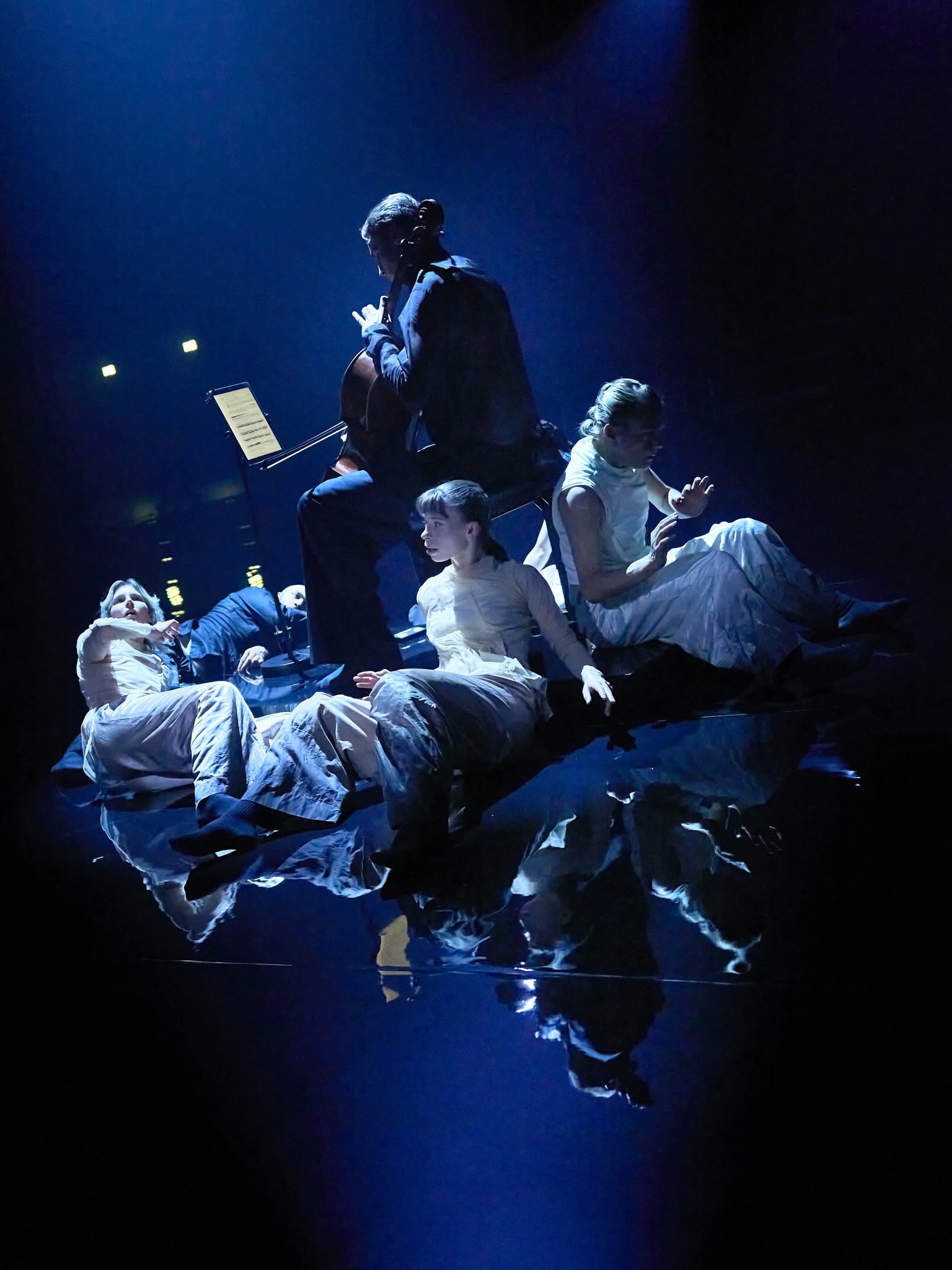
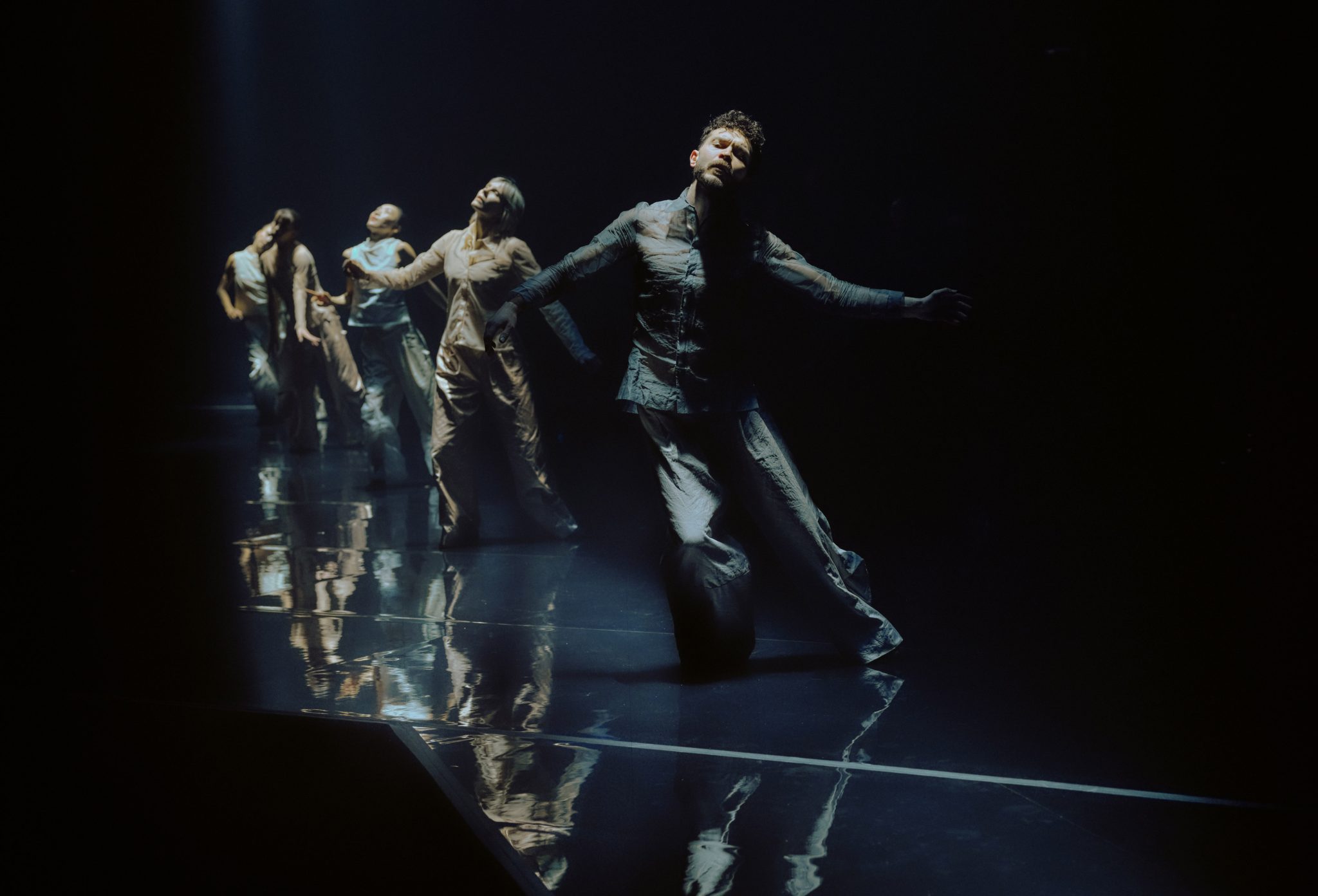
T.S Eliot‘s poem The Hollow Men depicts a dark, anxious and cynical post-war hopelessness. Together with light and set designers Fabiana and Sander, we wanted to place all the events on a special mirrored surface that reflects depth and fragility. As if all of humanity were “on thin ice”.
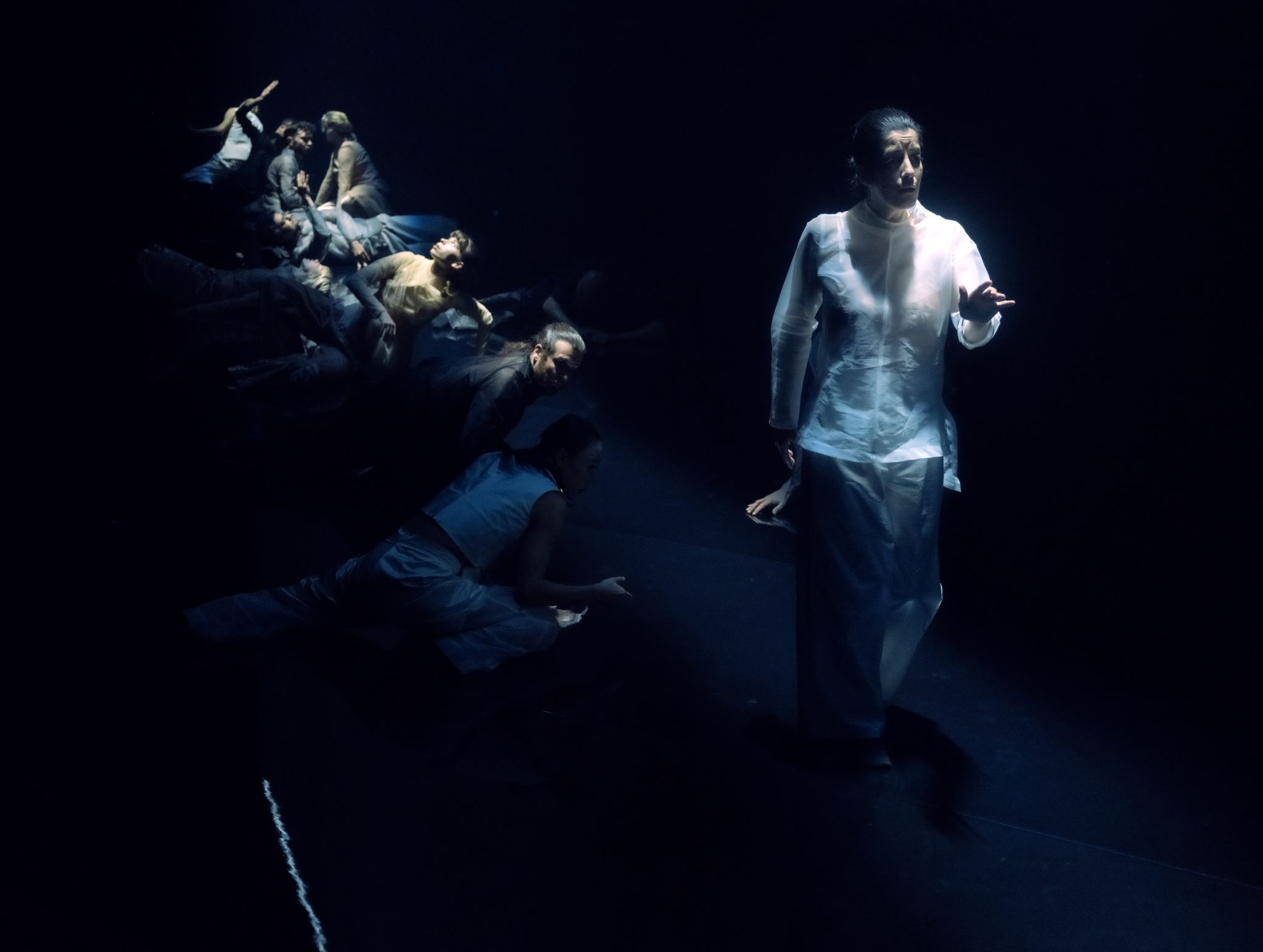
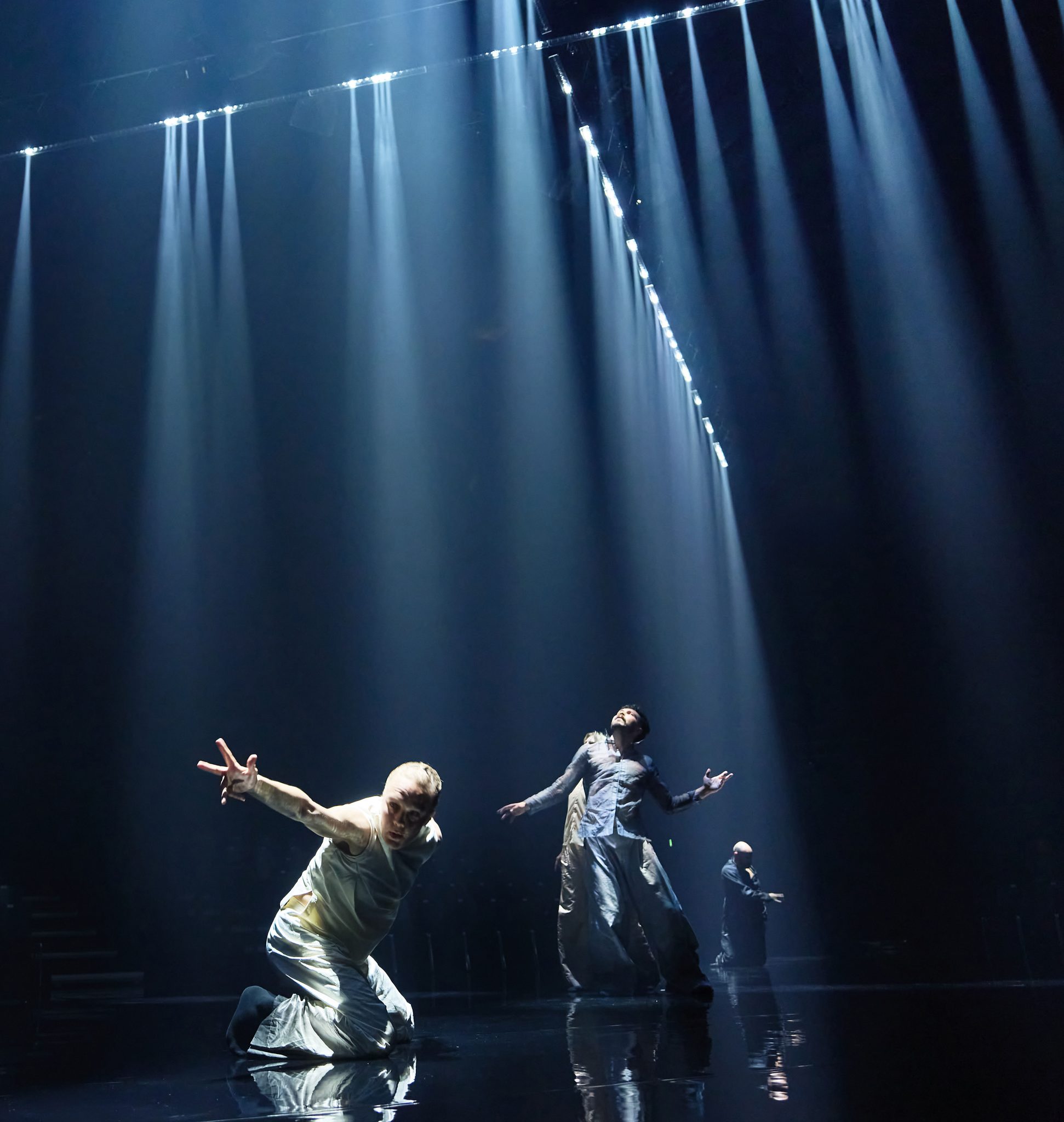
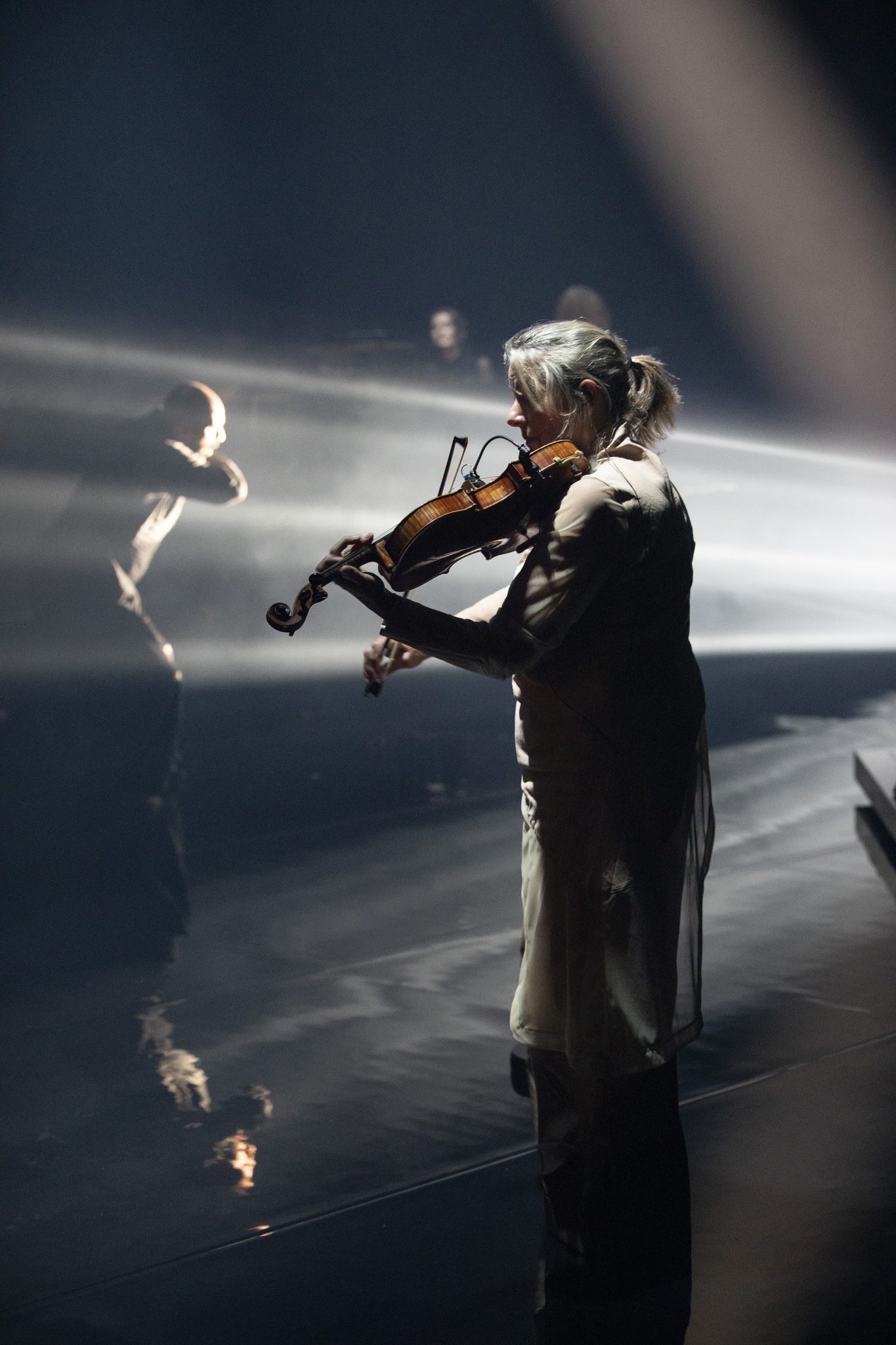
The performers are in harsh, constantly changing lighting conditions. The light blinds, reveals and accuses. Just as by closing our eyes we cannot control the amount, speed or content of residual information left by the traumatic past.
Only one section of Eliot’s poem is used in Kaija’s composition:
Between the idea and the reality
Between the motion and the act
Falls the shadow
For Thine is the Kingdom
Between the concept and the creation
Between the emotion and the response
Falls the Shadow
Life is very Long
Between the desire and the spasm
Between the potency and the existence Between the essence and the descent
Falls the Shadow
For Thine is the Kingdom
The soprano is the vocal and verbal conscience of the work, its reminder and seer. A voice that is sometimes physically very close and present, but at other times distant, ethereal and transcendent. The moving platforms, shifting between closeness and distance, play with proximities and the immersive quality of the space.
Petals
Just as this composition challenges the cellist to converse with contrasting themes, it seemed clear that this would be a danced encounter between two dancers, a dialogue between opposing dynamics and forces. Challenging these energies offers an opportunity for re-evaluation and transformation. In fact, the entire piece emphasizes the importance of being connected – whether it be yourself, another person, or other stimuli around us.
Pixel Alarm (Tuomas Norvio’s sound world)
Tuomas’s Pixel Alarm acts as a kind of interference or violent wake-up signal. The equation of light and sound presents random pixelated people far apart. A kind of primitive or animalistic dance begins to take shape, as if to suggest another possibility.
Attente
Amin Maalouf’s poem paints a touching but also frustrating situation where someone who gives their all, despite great effort, receives no response.
Je suis la barque qui dérive Mon amant est sur l’autre rive Et la mer est si vaste
Je suis la barque qui dérive Mon amant est sur l’autre rive Et le vent est tombé
J’ai déployé toutes les voiles Pour que le vent me pousse
J’ai déployé toutes les voiles Pour que l’amant me voie
On the other hand, this can be read as an inability to receive, see or hear what is offered. What if we were more receptive? What if we could sensitize our senses more? For me, the soprano expects – even demands – things to change and also initiates them.
Lichtbogen
Rearranging the space and forming the performers into a slowly rotating “family portrait”. The space becomes more sensitive and focuses on listening – both for the performers and spectators. The struggle and friction of the previous scenes begins to subside and the groundwork for new emotions, new forms and new sounds is laid.
The utmost sensitivity to the music’s suggestions allows the dancers to welcome a new kind of energy, form and journey. As the title of Kaija’s piece suggests, the use of light and its significance are emphasized.
To me, this composition feels like it washes away the old and offers light towards the new. After Lichtbogen ends, the soprano sends out a new platform, the sound and resonance of which instills a new power, creativity and lightness.
Parfum de l’instant
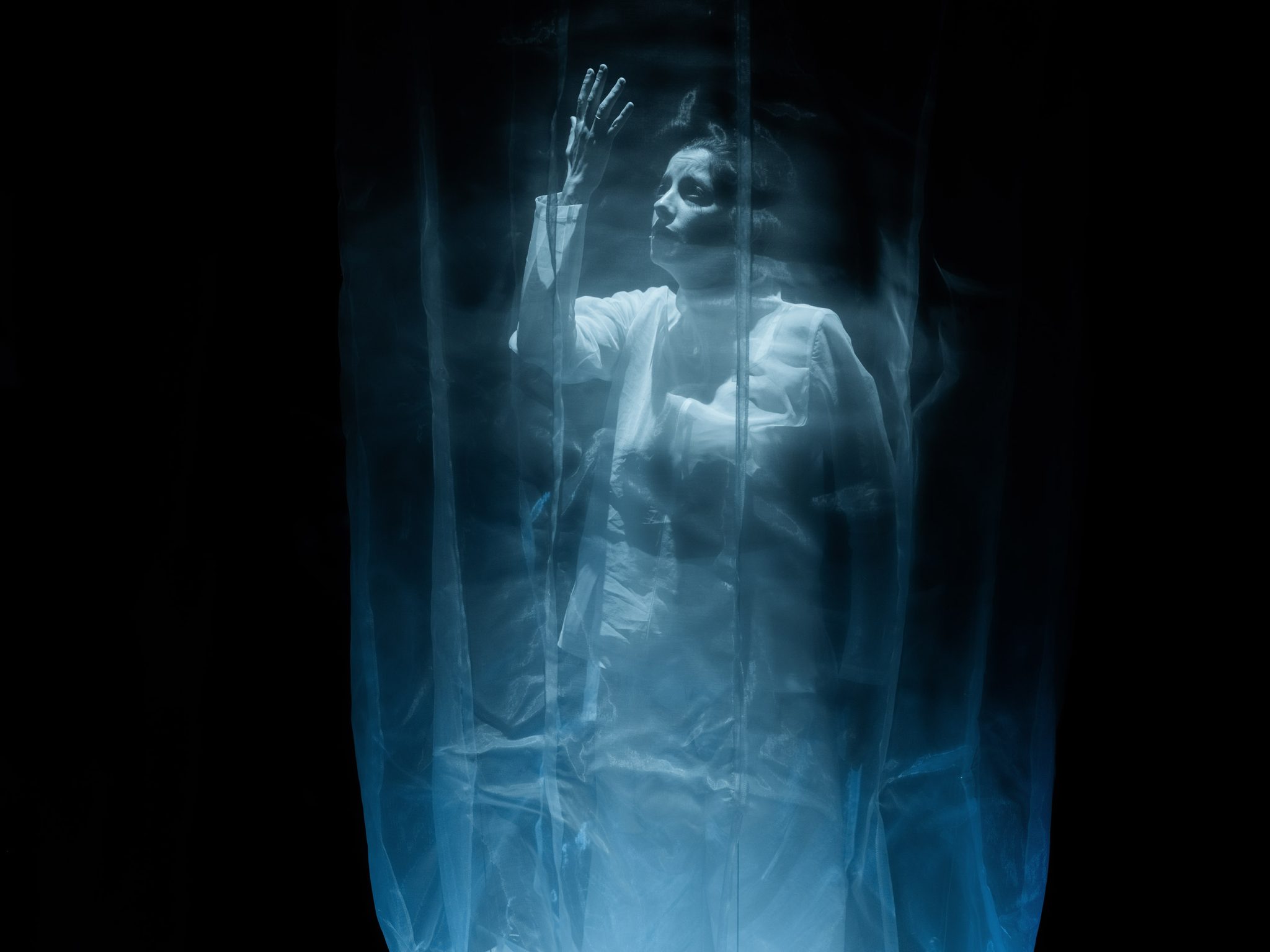
A huge transparent structure descends from the ceiling, resembling the shape of the ice installation that initially melted in the lobby.
Tu es auprès de moi Mais je ferme les yeux Pour t’imaginer
Nos lèvres se frôlent Nos doigts s’emmêlent Nos corps se découvrent Mais je ferme les yeux Pour rêver de toi
Tu es le parfum de l’instant Tu es la peau du rêve Et déjà la matière du souvenir
From the beginning, I felt like this song was the most natural way to end our evening. Kaija offered us the opportunity to hear differently, to feel sounds in a new way, and I wanted to pay tribute to that. By allowing new sounds, forms, and possibilities to emerge, we can saturate our being with ever more diverse colors. It is our privilege to cherish, continue, and further develop the legacies given to us.
About Het Muziek
Het Muziek (previously named Asko|Schönberg) is one of The Netherlands’ leading ensembles for new music. The ensemble presents daring concerts and performances with composed music from the 20th and 21st centuries in various settings, from concert stages and outdoor festivals to theater halls. The emphasis is on stimulating and creating new work by contemporary makers. Het Muziek is ensemble in residence at the Muziekgebouw.
Reviews
"With this production, Tero Saarinen succeeded in making the essence of Kaija Saariaho’s musical voice both visible and tangible. This was not simple entertainment, but a demanding, thought-provoking experience that lingered long afterward. Study for Life proved to be a powerful tribute to Saariaho’s singular artistic voice — an intense, atmospherically rich Gesamtkunstwerk that both unsettled and fascinated, and ultimately stood as a worthy monument."
Vorarlberger Nachrichten (Austria)
1 August 2025
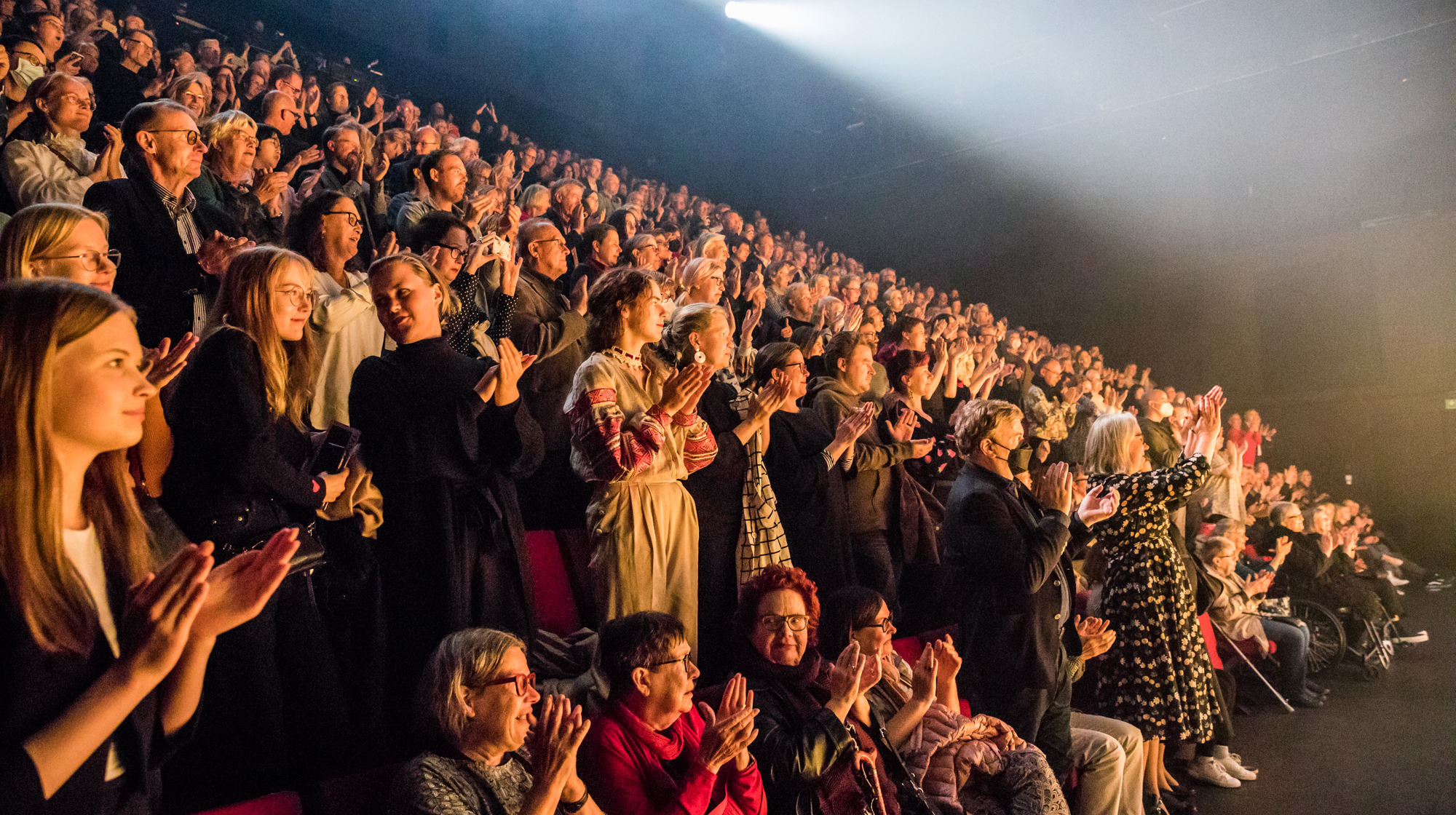
"Together with [sound designer Tuomas] Norvio, costume, lighting and set designers Erika Turunen, Fabiana Piccioli, and Sander Loonen, Saarinen has created a compelling way to make the synesthetic world of Saariaho—known for blending sensory perceptions—concretely experienceable. The Austrian premiere of Study for Life—met with enthusiastic applause by the Bregenz audience—proved to be a genre fusion at its finest.”
APA News Service, Christa Dietrich (Austria)
31 July 2025
"This outright phenomenal performance is certainly more than a contemporary dance piece. - - It’s astonishing how well everything fuses here – music, dance, lighting, and space work together to tell the story. - - truly magical."
Nieuwe Noten, Ben Taffijn (The Netherlands)
26 June 2025
"Soprano Raquel Camarinha, six dancers, and nine musicians [of Het Muziek] performed an extraordinary musical ritual, under an absolutely brilliant lighting design. - - What a truly beautiful evening."
Trouw, Peter van der Lint (The Netherlands)
29 June 2025
Tero Saarinen Company Technical Director Ville Konttinen
Sound Technician
Vincent Masse
Lighting Supervisor Rasmus Kallio
Lighting Supervisor Ville Finnilä
Lighting Supervisor Klaus Eklund
Teatteripalvelu Taito Oy
Stage Manager Ilmari Paananen
Stage Manager Valtteri Halonen
Stage Technician Juuso Joutsio
Audio Technician Kaisla Kalo
Dance House Helsinki
Stage Manager
Joshua Krohn
Stage Manager
Jeff Campbell
Technical Equipment Dry Hire
Miika Granholm
CAPITAL AV
Seating structures
Pågå
Lavasteverstas Graniitti Oy
Making of costumes and set
Costumes Johanna Vehmas Ilkka Salakari Kirsi Unkuri Taru Hahle Hanna Vuorela
Set Emanuele Salamanca
Tero Saarinen Company | Production
Managing Director Iiris Autio
Head of Communications Paula Rahtu
Head of Production and Touring Carita Weissenfelt
Administrative coordinator
Salla Hokkanen
Production Coordinator Anni Jokimies
Communications and Marketing Specialist Veera Mietola
Marketing materials Mikko Lampinen
Digital evening programme Veera Mietola
Making this creation possible:
TSC Advisory Board | TSC Journey
Supported in 2026 by:
TSC Friends
Get closer to us!
As a Friend, Supporter or Sponsor of Tero Saarinen Company, you will be the first to receive information about our upcoming performances and new creations. You will be able to purchase tickets for the best seats in the house and attend our unique friends’ events.
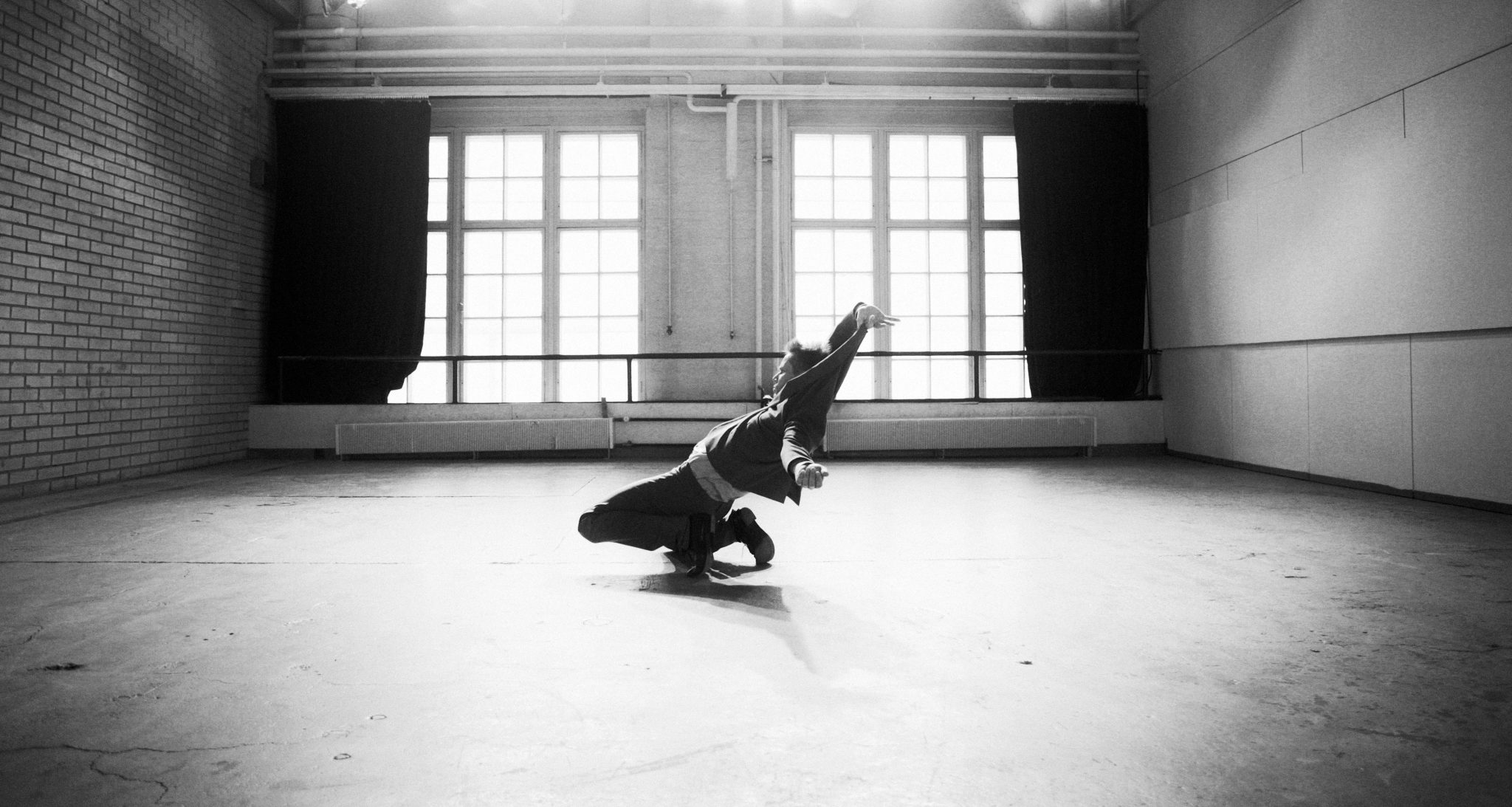
“Dance has exceptional potential in this time that is so strongly marked by alienation from the body. Dance is my attempt to understand human nature and its multiple manifestations – friendship, love and strength of spirit.
With my dance I want to reach the unspoken, the inexplicable, the unnamed. I believe in dance that touches, in dance that speaks for itself.”
– Tero Saarinen
Tero Saarinen Company creates, performs, and teaches powerful and engaging contemporary dance. Founded in 1996, The Company has toured at leading venues in 40 countries on all continents. Three yearly seasons at Dance House Helsinki feature new works by Tero Saarinen and other choreographers along with international guest performances and the group’s own classics.
TSC’s activities also include teaching TERO Technique internationally and a residency programme at TSC Studio, located at the Cable Factory, Helsinki.
Tero Saarinen Company’s core objective is to improve people’s relationship with their own bodies, themselves and other people through movement and holistic dance that tap into primal energies.