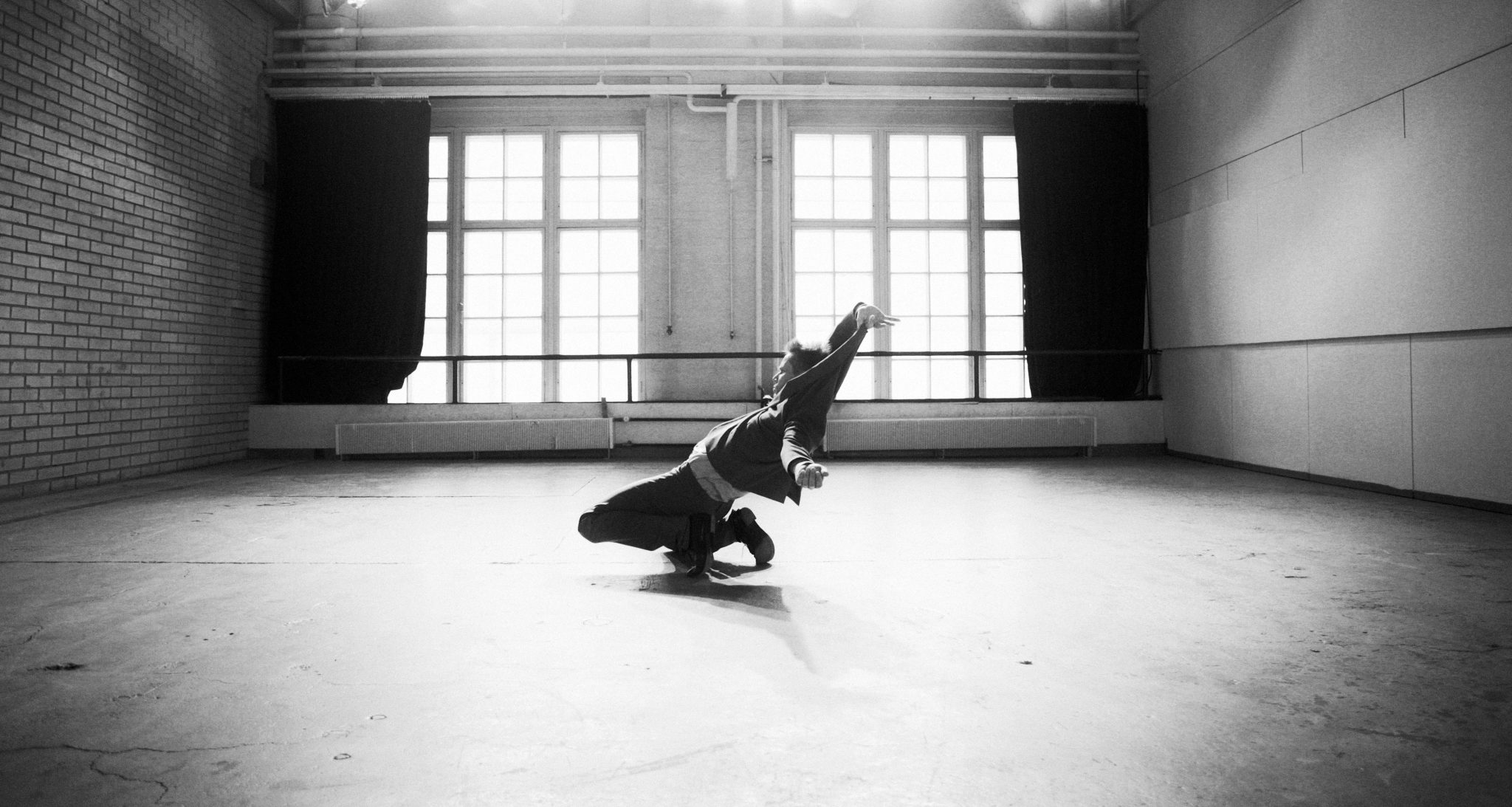
Tero Saarinen: Garden
Carolyn Carlson: Room 7 Intermission, approx. 30 minutes Sonya Lindfors: Wild Is the Wind
Duration: 2h 30 minutes
Foreword
TSC’s 30th anniversary evening celebrates the diversity brought by choreographers from three different generations, spanning aesthetics, influences and themes.
The creations remind us of the many different ways in which dance can engage with the defining questions of our time: humanity, power, identity, our relationship with nature, and otherness. What connects the choreographers is their trust in the performers as individuals, whose distinct identities, backgrounds and experiences are an integral part of how meaning is created within each work.
American, but of Finnish descent through her grandparents, Carolyn Carlson has forged a distinguished career in France, renewing European modern dance and leaving a strong mark on dance as a poetic form of expression. In Tero’s choreographic thinking, ballet combines with influences from Asian dance traditions, with movement engaging in dialogue with light, music, and other arts to form a total work of art. Finnish-Cameroonian Sonya Lindfors’ work centers on themes of power, representation and community as well as societal change through art. In her pieces the traditions of contemporary dance merge with street dance and more theatrical practices.
Vitality and success have always grown from curiosity, crossing boundaries, a desire to learn from one another, and the ability to see diversity as a strength. Even the most vibrant art cannot renew itself in a vacuum; it needs continuous interaction with the world around it. Our belief in the importance of international exchange, and in the growing power of dance to speak for our shared humanity, will carry us forward into the decades to come.
– Iiris Autio & Tero Saarinen
Choreographer's note: Garden
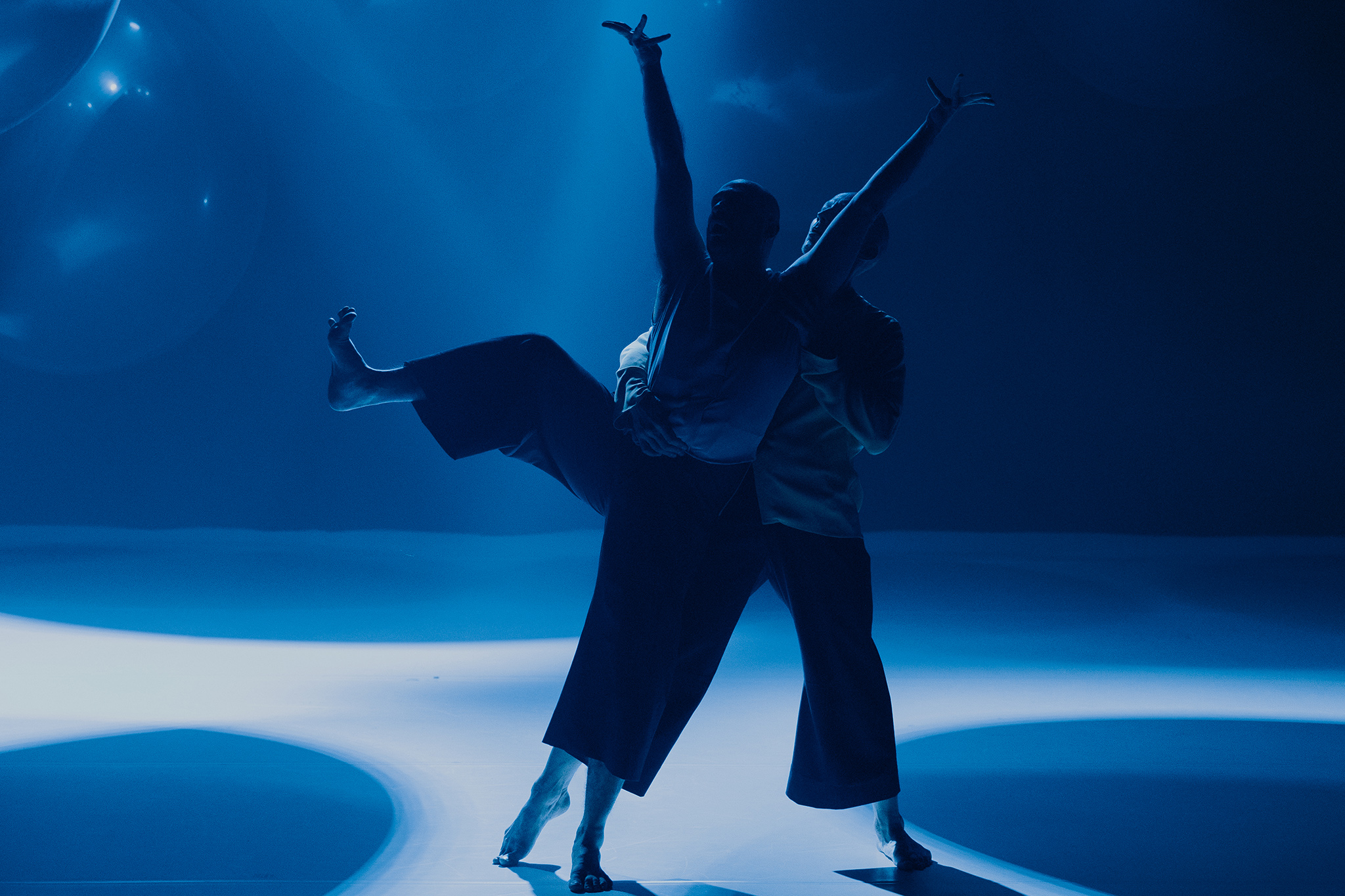
“In this work, nature is not merely a background setting, but an essential part of understanding humanity, history, and time. During the creation process, I returned after a long time to the thoughts of the French writer Marguerite Yourcenar (1903–1987). In her work the garden, a frequent theme in her work, opens up as a metaphor for humanity and vulnerability, while serving as a mirror to our relationship with nature. She views human actions through the lens of the garden, which resonates strongly with my own artistic practice.
I have always been interested in flora and fauna, and how the primal nature of the human body is an inseparable part of nature itself. If we destroy nature, we also corrupt the memory of our bodies and the primal strength that lives within us.
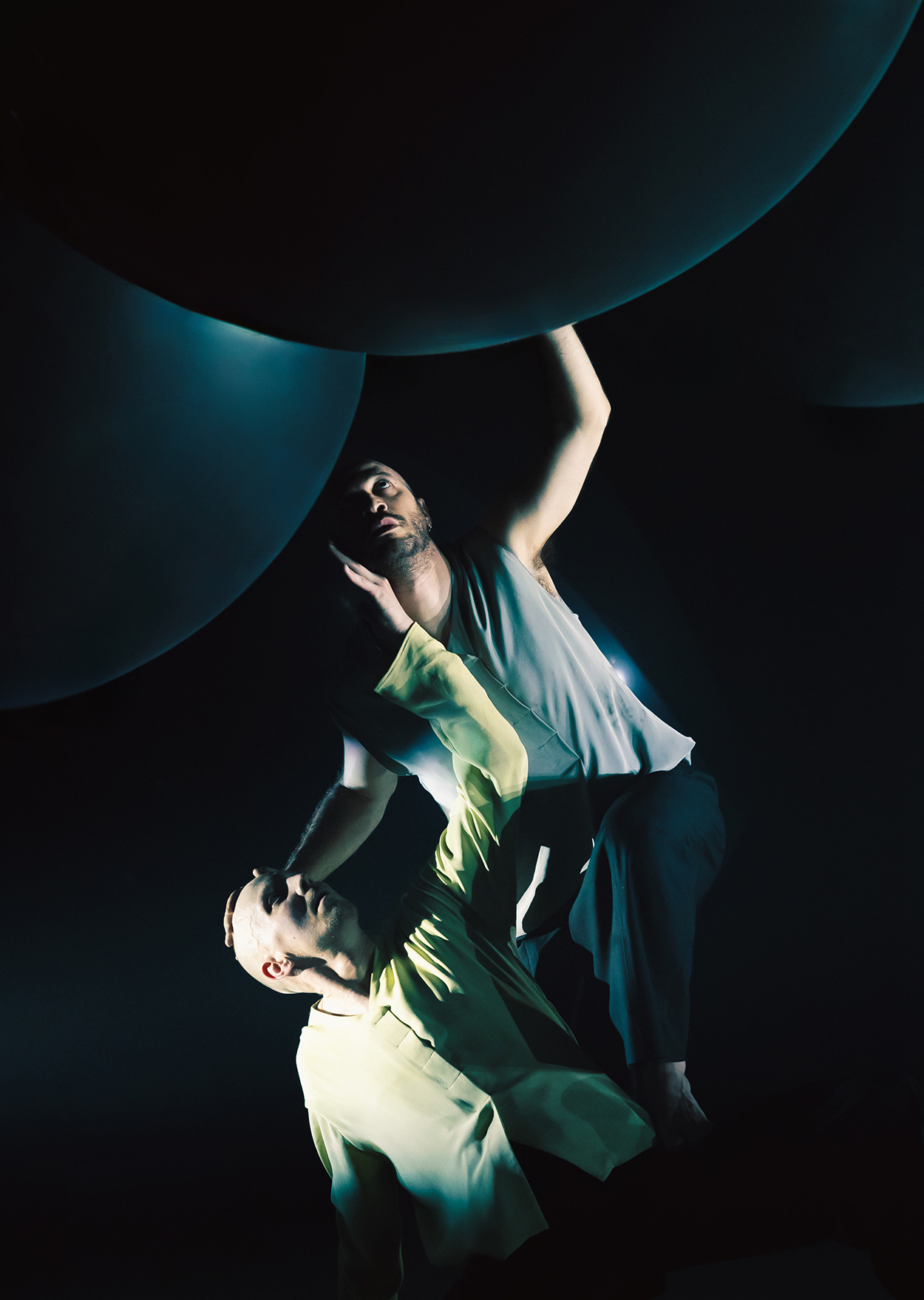
In this duet, I did not want to deal with interpersonal drama. Rather, the connection between the two dancers acts as a gateway to something third: the surrounding world and a shared resolve to begin changing things. We carry responsibility for our environment and our actions, which is why I wanted the pair in the piece to emphasize a broader need for togetherness: to repair the chaos we have created in the world. The dark clouds of pollution hovering over the metaphorical landscape create an environment where trust, understanding, and a shared desire to move forward are tested.
The piece has two casts, and through different individuals the work breathes, lives, and finds new forms. Each pair has the freedom to use the music in different ways and to make decisions in the moment.
Every work is inevitably also a mirror reflecting oneself, history, and the present moment. While creating this work, I have thought a lot about connection: how to connect with other people, how to create space where another can grow and flourish – and how an entire group can flourish. Butoh is also present in the work. When I studied it years ago in Japan, it guided me toward a more natural, primal movement, form, and expressiveness. The experiences, thoughts, and tools I gained from Butoh reminded me of the wisdom of the body and its connection to all living things. In creating this duet, I return to these teachings while searching for new forms for them together with the dancers. I feel ever more strongly that one of my tasks is to pass on these experiences and tools to the generations that follow, and it has been so inspiring to find people who want to step forward and join this voyage of discovery.”
–Tero Saarinen
Production:
Tero Saarinen Company
Duration:
35 minutes
Premiere:
23 April 2026, Teatro della Tosse, Genoa, Italy
From Maa to Room 7: Tero Saarinen on Working with Carolyn Carlson
“I first worked with Carolyn Carlson in 1991, when she created the work Maa for the Finnish National Ballet. I have always felt an inexplicable connection with her and her way of conveying her message through dance. In our meetings I felt a strong invisible bond, driving me to seek further opportunities to learn from her.
Carolyn is genuinely interested in dialogue and the many colours and complexities of being human. She is deeply interested in the person in front of her, which makes it quite a privilege to embark on a joint creative process with her. She feeds the creative process through images, symbols and allegories, being very intuitive, interactive and transparent.
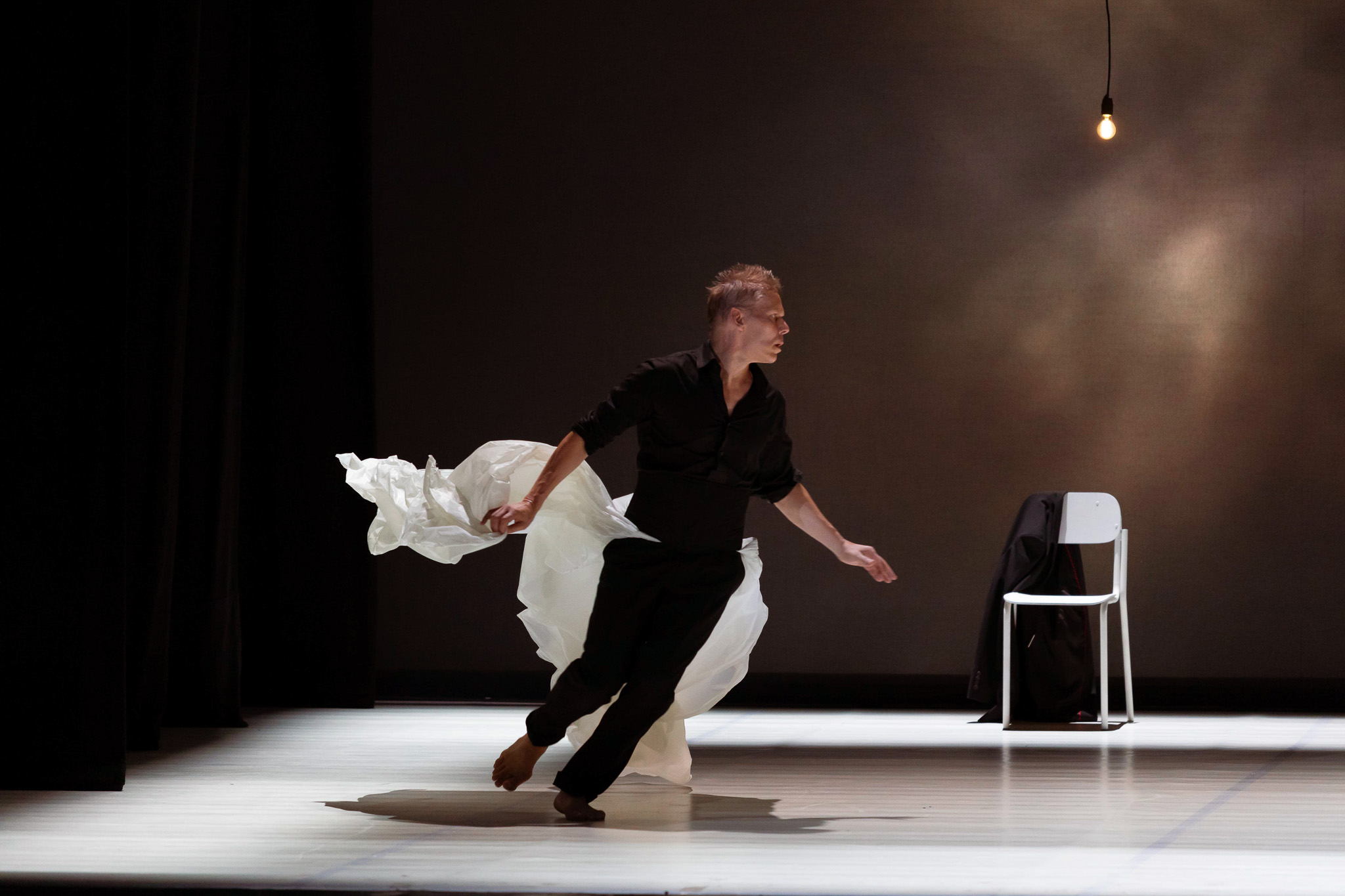
I have been fortunate to interpret four of her solos over four decades. In Travelling (1998), she wanted to challenge my mercurial need to move constantly by keeping me still. It was a very educational experience for me and my dancing. The solo Man in a Room (2000), inspired by the life and work of Mark Rothko, dived deep into the cacophony, loneliness and absoluteness of being an artist. I loved portraying the range of emotions and eternal despair in front of a blank canvas. Carolyn has a very keen and sharp eye for the surrealism of life, uncovering something absurd and humorous even in the deepest waters.
In 2002, after she saw my solo HUNT, she invited me to dance her iconic solo Blue Lady. Having seen her perform the original piece in 1992 it was clear that this version would be a revisit – not a copy or imitation of the original. No one can be like Carolyn.
One night, after a performance, Carolyn gave me feedback that I will never forget: “Tero, you were too important today”. With this she opened the ethos of her art-making; dancing and performing are a meditation, a deep exploration of the primal forces of being, without an ego.
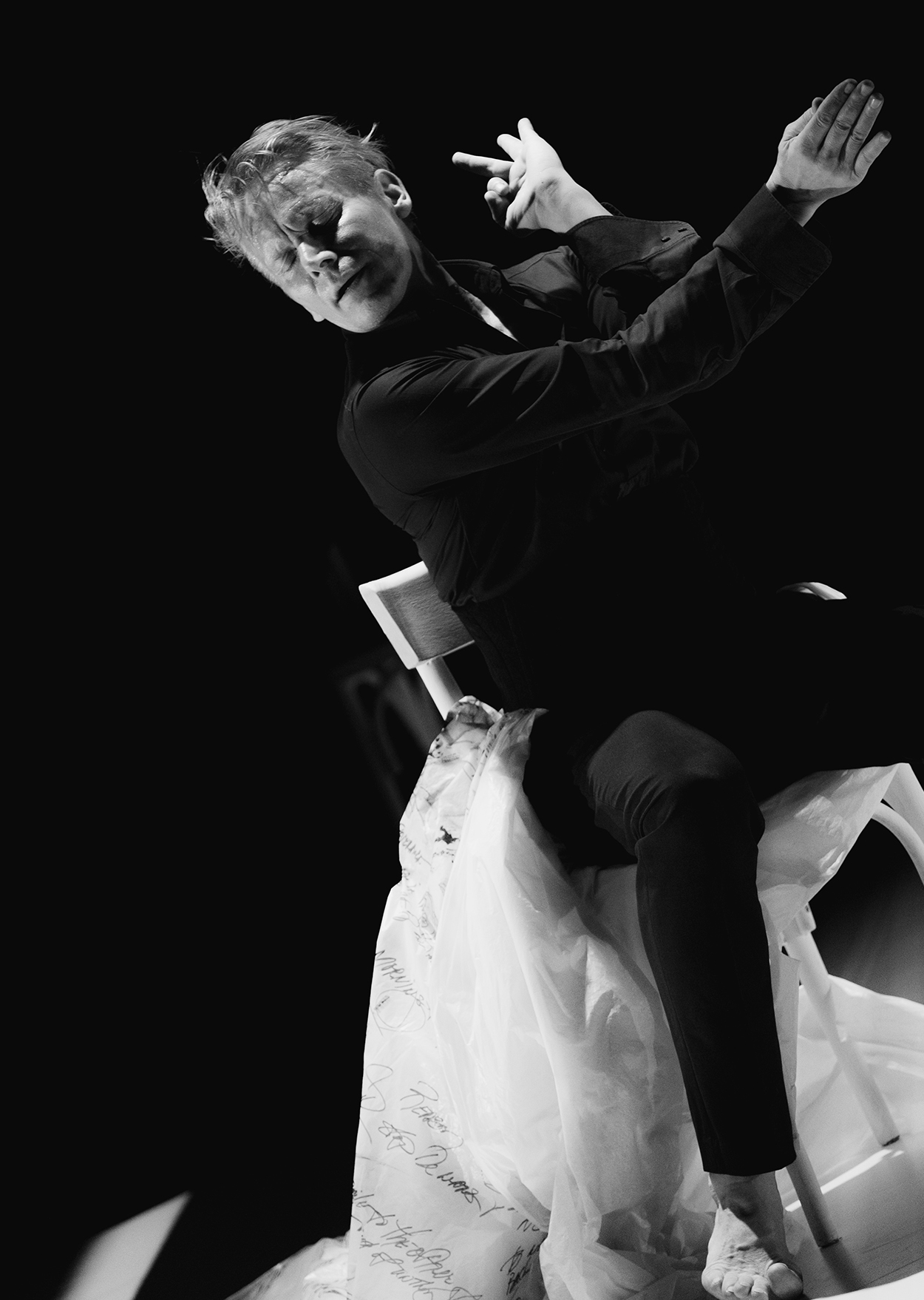
Our journey together continues, in July 2024 Room 7 premiered in Italy at the Civitanova Danza festival. The solo allows my older but still wild mind and body to dive through memories and life’s encounters. Through farewells, something new is always born.
Carolyn often talks about Alwin Nikolais and his influence on her artistic journey. We are all partly products of our past. We carry experiential, educational and also intergenerational silent knowledge within us as we try to build our own path and find our own voice. Carolyn has never set out to please trends, or what is fashionable at the moment, but has uncompromisingly followed her own vision and ethos of art-making decade after decade. We need these beacons that light the way far into the future. I am forever grateful to have been able to work with and learn from Carolyn and be a part of her authentic and unique world.”
–Tero Saarinen
Choreographer's note, Room 7
”Tero and I share similar perceptions of dance. We see dance as visual poetry. When we create together, we rarely speak about steps. We speak about poetry and presence.
I have always loved creating solos because the focus is entirely on one person. Tero has a great charisma, and for me, that is also what dance is: something that passes between the performer and the audience.
I don’t like to define my work too closely. I work with poetry, and poetry holds meanings that remain hidden. With this piece, I hope to awaken the imagination. I want each observer to perceive the work in their own way, and to discover their own meanings within it.”
–Carolyn Carlson
Production:
Tero Saarinen Company In collaboration with: Centre Chorégraphique National de Rillieux-la-Pape (France), Atelier de Paris (France), Civitanova Danza (Italy), Carolyn Carlson Company (France)
Duration:
30 minutes
Premiere:
4 July 2024, Teatro Rossini, Civitanova Danza, Italy
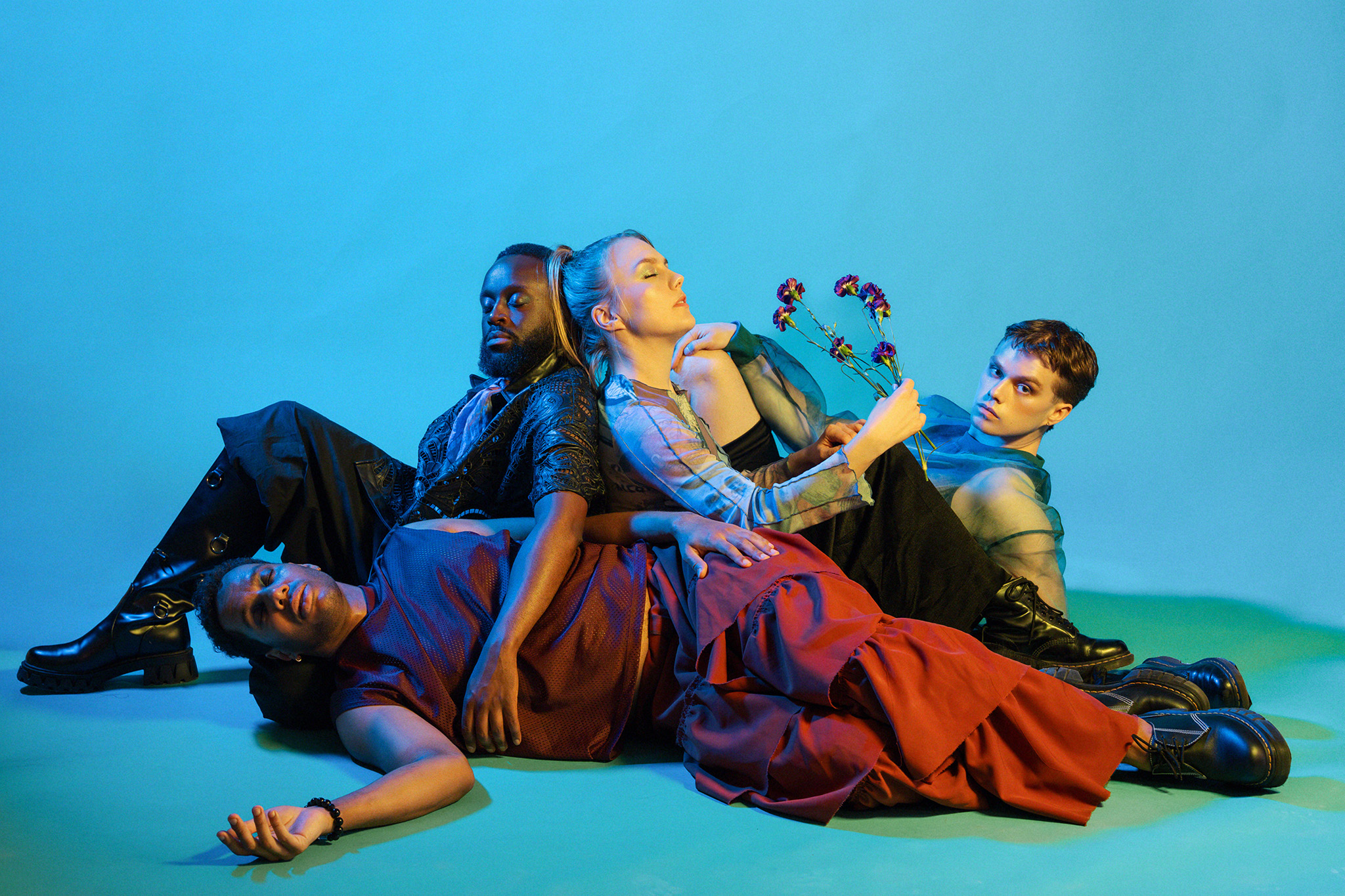
“We are living through turbulent times. Surrounded by multiple, intersecting crises, change for the better has at times felt impossible. At this moment, I therefore want to explore the potential of art and the stage in particular, to imagine possible worlds and alternative futures. Art holds immense power: it can tell stories about humanity, Finnishness, or what we consider good or compelling. Art does not merely reflect the world as it is; it also actively produces new realities.
In Wild Is the Wind, we gather around questions of change and agency.
We have asked how energies, moods, atmospheres and norms might be moved and transformed. Can we shift the energetic, affective or political air? What kind of magic can emerge on a dance floor in the club in the wee small hours of the morning, when intoxicating music, collective rhythm and sweat transform exhaustion into a momentary sense of freedom and belonging? Or how can a blues singer, over the course of a single song, begin with collective suffering, sorrow and pain and transform the energy into something empowering, consoling and hope-giving? The world moves us, at times tossing us around like a wild wind, but we are not merely at the mercy of our circumstances. We, too, can move the world.
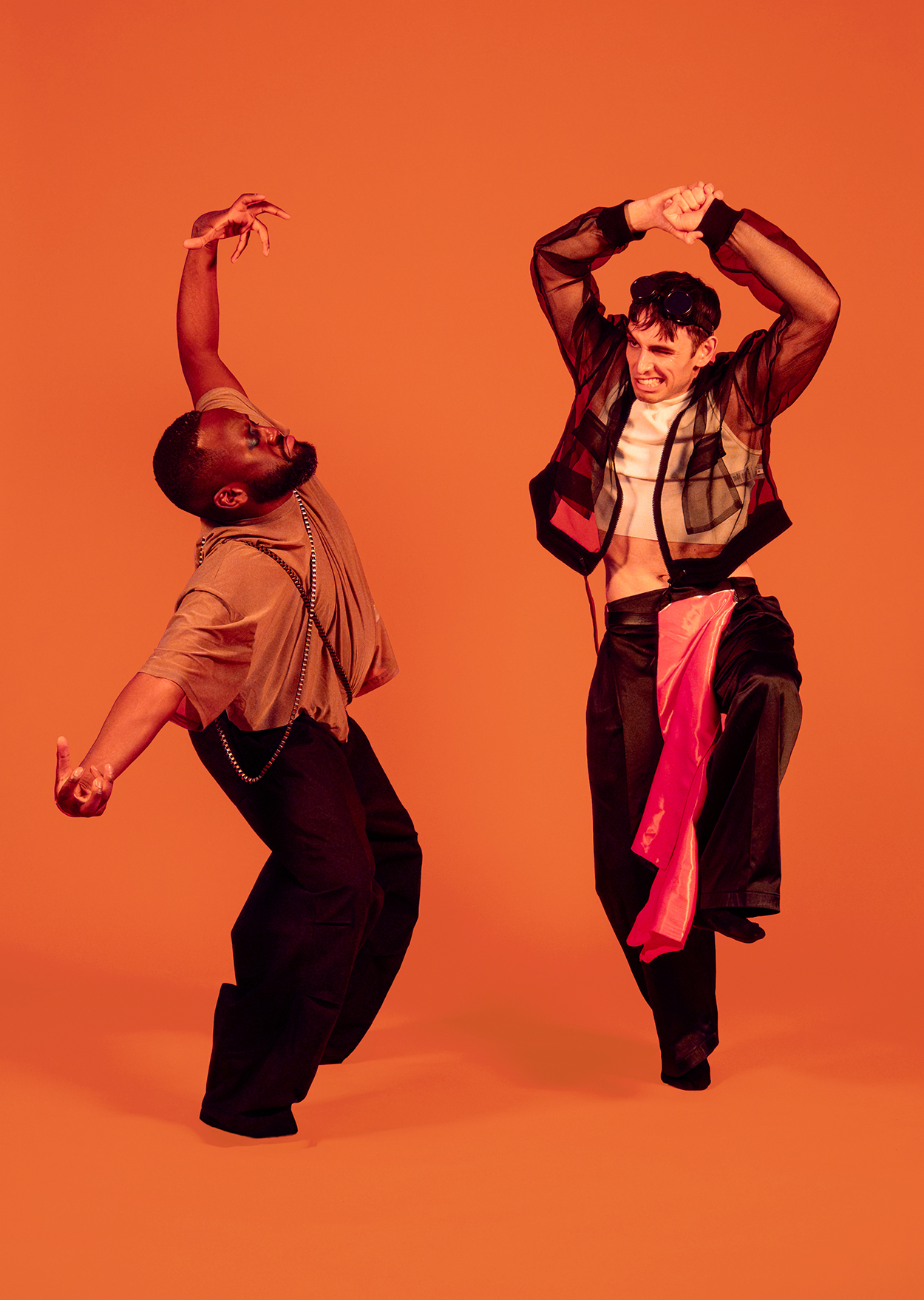
Like my previous works, Wild Is the Wind draws deeply from the traditions of Black performance.* Throughout history, art has acted as a catalyst in moments of upheaval, but the roots of African diasporic arts are particularly intertwined with transformation, radical resistance, collectivity and subversion. While winds of change blow through the work, the ghosts of history remain powerfully present. Sound and music play a particularly central role. The sound system and the trumpet – each, in its own way, a trope of Black performance – open portals and generate vortices and currents. The work samples Marvin Gaye’s What’s Going On, which emerged between 1969 and 1971 amid war, police violence and deep political division. Nina Simone’s version of Wild Is the Wind, from which the work also takes its name, was released at a time when Black people were still denied equal rights in both law and lived reality. In the midst of painful histories, art has been able to transform the suffering of communities into collective strength and hope. Without romanticising hardship in any way, there is something magical in this transformative power.
What is particularly magical about Wild Is the Wind is its working group! Our diverse group brings together different artistic practices, movement traditions and aesthetics and, through them, different histories and questions. Polyphony and polycentrality are at the heart of my practice, as is gathering around something shared and common. In Wild Is the Wind, difference is not smoothed over; it is the work’s strength and even its radical potential. The work does not seek coherence, but rather resonance: different traditions, techniques, aesthetics, bodies and experiences can coexist and begin to vibrate in relation to one another and to the audience.
I am profoundly grateful for the journey we have been able to take together as a working group. In the process itself, I have already witnessed so much of the change I would like to see more of in the world: play, pleasure, diving into the unknown, continually encouraging one another, exercising agency while also making space, and learning from one another.
The work carries within it a proposition for being side by side: what might a stage look like if it were multipolar and playful, tender, communal, light and yet profound? Could the stage be a place where we practice connection across our differences, as equals?”
— Sonya Lindfors
* Theorist Thomas F. DeFrantz has written about Black Performance Theory in several essays. To freely paraphrase DeFrantz, Black performance emerges from the lived realities of the African diaspora and its diverse expressive traditions, technologies and aesthetic practices. Black performance is neither a fixed nor a clearly bounded genre, and the Blackness of a performance is not determined by a performer’s identity or skin colour. Instead, Black performance takes shape anew across different times, places and performance contexts. Blackness may become manifest in performance through movement and sonic traditions and techniques, diverse expressive practices, polyphony, countermovement, a relationship to the surrounding society, and the invitation of communal voices into the event. Performance can thus intensify presence, expand collective agency and open up space for courage, being seen and transformation.
Production: Tero Saarinen Company in collaboration with UTT ry
Duration: 40 minutes
Premiere: 22 September 2026, Dance House Helsinki
Technical team
Tero Saarinen Company Technical Director Ville Konttinen
Sound Technician
Vincent Masse
Lighting Supervisor Rasmus Kallio
Lighting Supervisor Ville Finnilä
Lighting Supervisor Klaus Eklund
Teatteripalvelu Taito Oy
Lighting Technician Pekka Hänninen
Lighting Technician Juuso Joutsio
Stage Manager Antto “Luca” Karvonen
Lighting Technician Mikael Saine
Dance House Helsinki
Stage Manager Joshua Krohn
Stage Manager Jeff Campbell
Technical Equipment Dry Hire Miika Granholm
CAPITAL AV
Technical personnel hire Panu Sirkiä
Teatteripalvelu TAITO Oy
Tero Saarinen Company | Production
Managing Director Iiris Autio
Head of Communications Paula Rahtu
Head of Production and Touring Carita Weissenfelt
Project and Development Coordinator
Eemeli Auvinen
Administrative coordinator
Salla Hokkanen
Production and Training Coordinator Anni Jokimies Cañete
Communications and Marketing Specialist Veera Mietola
Marketing materials Mikko Lampinen
Digital evening programme Veera Mietola
Supported in 2026 by:
TSC Friends
Get closer to us!
As a Friend, Supporter or Sponsor of Tero Saarinen Company, you will be the first to receive information about our upcoming performances and new creations. You will be able to purchase tickets for the best seats in the house and attend our unique friends’ events.
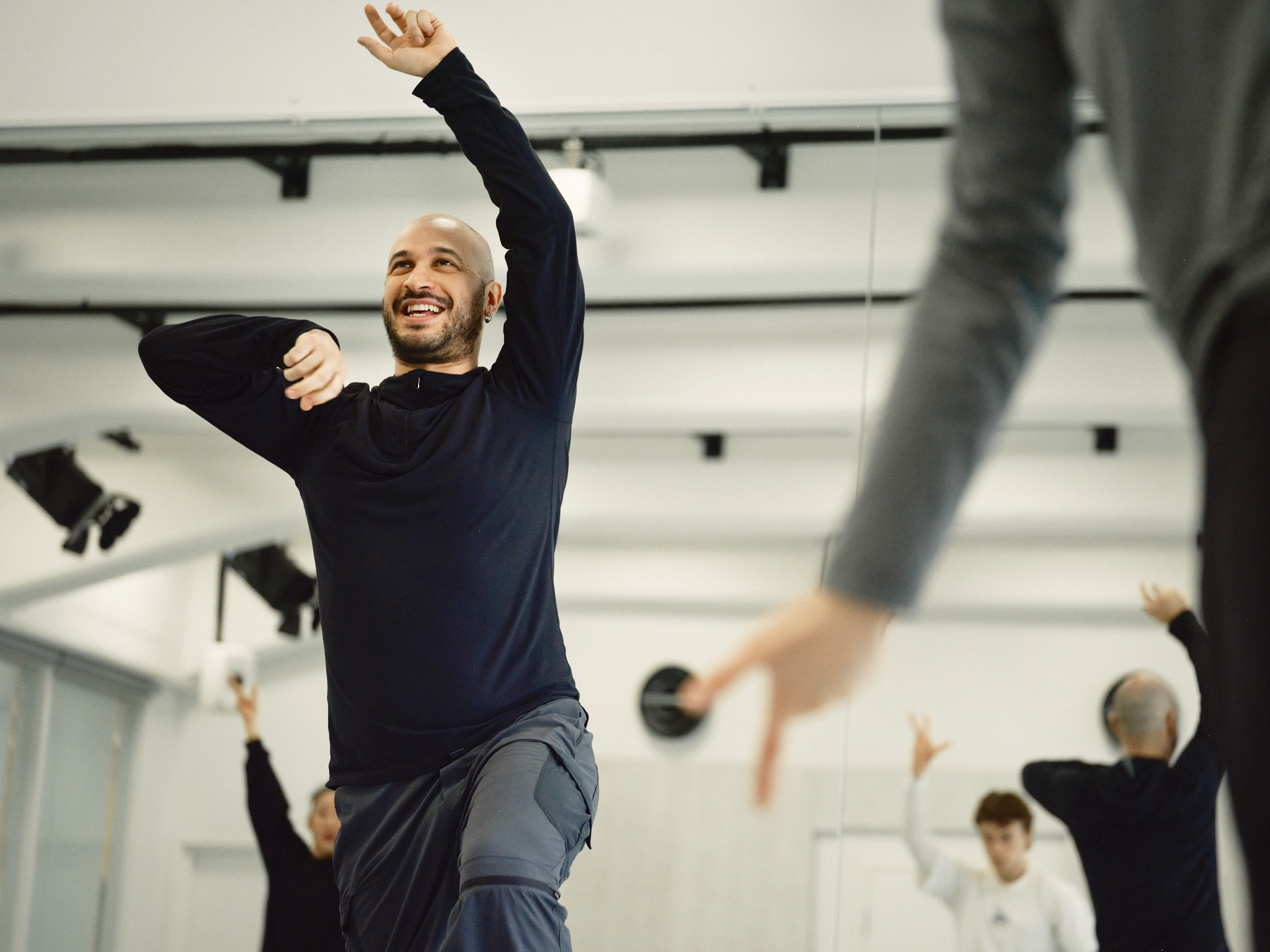
Our morning classes and workshops at TSC Studio are designed for dance professionals seeking a holistic approach to movement. On our morning classes we have Tero Technique and Pilates taught by TSC dancers. We also organize classes and workshops led by visiting teachers and choreographers, providing opportunities to explore new approaches and deepen your artistic research.
“Dance has exceptional potential in this time that is so strongly marked by alienation from the body. Dance is my attempt to understand human nature and its multiple manifestations – friendship, love and strength of spirit.
With my dance I want to reach the unspoken, the inexplicable, the unnamed. I believe in dance that touches, in dance that speaks for itself.”
– Tero Saarinen
Tero Saarinen Company creates, performs, and teaches powerful and engaging contemporary dance. Founded in 1996, The Company has toured at leading venues in 40 countries on all continents. Three yearly seasons at Dance House Helsinki feature new works by Tero Saarinen and other choreographers along with international guest performances and the group’s own classics.
TSC’s activities also include teaching Tero Technique internationally and a residency programme at TSC Studio, located at the Cable Factory, Helsinki.
Tero Saarinen Company’s core objective is to improve people’s relationship with their own bodies, themselves and other people through movement and holistic dance that tap into primal energies.